
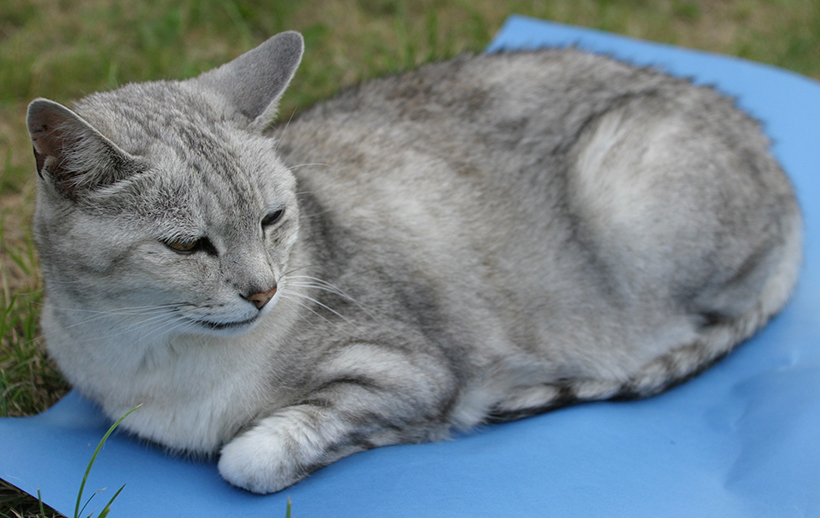
Have you ever wondered how to tell if your cat is in pain?
The ancestors of cats who now live with us are originally solo wildcats, who still live alone in the Near East. Showing obvious signs of vulnerability, such as being ill or in pain, would alert predators that there was some possible and easy prey
This may be one of the reasons cats generally only show subtle signs of pain. Another reason could be that living alone, and showing signs of pain would not be helpful, unlike social beings like dogs or us, showing our pain would be to our benefit.
There is now a website with a Feline Grimace Scale that can be useful in detecting early sighs of pain in your cat. https://www.felinegrimacescale.com/
Behaviour Changes
Examples of some behaviour changes in cats may be pain-related
- Less keen on being stroked, moving away, or lashing out
- Hisses when you approach
- Hissing progressing to growling or scratching or biting on approach or touch
- Fur rippling
If these are new behaviour patterns, please take your cat to the vet.
Further behavioural signs possibly indicate pain
- Peeing outside the litter tray
- Peeing small amounts at a time in several locations
- Going to hide immediately after peeing
- Meowing when entering, using or leaving the tray
Whenever you are unsure, first rule out pain before consulting a behaviourist.